1. Study Period Options
The JTW program provide two options for your study period as its participants:
- Option 1: Academic Year Period
Fall-Winter Semester (October – February) AND Spring-Summer Semester (April – August) - Option 2: One Semester Period
Fall-Winter Semester (October – February) OR Spring-Summer Semester (April – August)
Option 1 is the program’s recommendation. As a comprehensive package of academic and experiential study program, JTW is designed to help participants to achieve the core objective – understand Japanese culture and society in today’s world – over the course of one academic year.
Simultaneously, JTW happily welcomes you just for one semester (Option 2) should this study period suits your schedule and needs in relation to your home institution.
2. Academic Learning (For Credit)
2.1. Academic Policies & Requirements
GENERAL POLICIES
JTW PROGRAM COMPLETION REQUIREMENTS
To comply with Japanese immigration law, all students participating in the JTW program must establish and maintain full enrollment status throughout their time in the program. Every semester, all JTW students are required to enroll in courses (and projects) totaling a minimum of 14 credit hours, selected from the designated list of approved courses and projects. It is essential to uphold the JTW completion requirement at all times during your participation.
Please also note that, when planning your courses each semester, you must ensure your course selection meets both (a) the JTW program completion requirements and (b) the minimum weekly class hour requirement set by Japanese immigration laws.
(a) JTW Program Completion Requirements: A minimum of 14 credit hours per semester
(b) Japanese Immigration Requirements: At least 10 hours of in-class learning activities per week
AWARDING OF CREDIT
As a Kyushu University study program for international students, JTW awards you official credit upon your successful completion of the courses you enroll in and the projects you undertake. Typically, successful completion of a semester-long course is worth 2 credits. The credit-awarding process also involves acquiring formal approval from the Kyushu University International Student Center Oversight Committee, which reviews your academic record.
CREDIT TRANSFER
It is possible to transfer JTW-awarded credit to your home university. Please be aware, however, that credit transfer is subject to the approval of your home university. The JTW program can’t request or even negotiate with your home university for approval of the transfer in any way. It is therefore your responsibility to consult in a timely manner with the appropriate advisor(s) at your home university on this matter. You are strongly advised to do so before or during the JTW course registration period, so that you and your home university will have a mutual understanding in place regarding the applicability of JTW courses and credits to your degree program.
The JTW Program is open to both undergraduate- and graduate-level students at their home institutions. Nonetheless, its academic components, including the core courses (as will be discussed below), are designed primarily for undergraduate students. While graduate-level students may also enroll in the core courses and earn credits, the learning objectives and courses requirements of the core courses are designed primarily to meet the needs of undergraduate-level students.
CERTIFICATE OF PROGRAM COMPLETION
The JTW program awards you a certificate of program completion at the end of your program period – in April for those participating only in the fall semester and in October for all other students. You are qualified to receive this certificate if you have met:
- The JTW program completion requirements; and
- All minimum requirements for the courses and projects as determined by the relevant course instructors or project supervisors.

COURSE SELECTION & REGISTRATION POLICIES
COURSE SELECTION REQUIREMENTS
To satisfy the JTW completion requirements, every semester, you are required to select courses (and projects, if you elect) from the following categories of academic activities designated specifically for all JTW students:
| Course/Project Category | Course/Project Type | |
| 1) | JTW Core Courses | Standard content courses |
| 2) | Regular faculty courses | |
| 3) | Independent Study Project (ISP) | Question-driven individual research projects |
| 4) | Advanced Laboratory Research (ALR) | |
| 5) | Japanese Academic Courses (JACs) | Language courses |
Your course selection should begin with selecting at least one JTW core course to enroll in. Each semester, you are required to enroll in JTW core courses and earn at least FOUR credit hours to meet the JTW completion requirements.
The other (minimum of) 10 credit hours may comprise, in variable combination, courses or projects from any of the remaining categories (including JTW core courses), in compliance with the maximum number of credit hours that may be counted from each category toward JTW completion requirements:
| Course/Project Category | Credits Counted toward JTW Completion |
| JTW core course | 4 credits (enrollment required) |
| PLUS | |
| Additional JTW core courses | Counted up to 10 credits |
| Regular faculty courses | Counted up to 4 credits |
| Japanese Academic Courses (JACs) | Counted up to 4 credits (equivalent to 2 courses) |
| Independent Study Project (ISP) | Counted up to 2 credits (1 project) |
| Advanced Laboratory Research (ALR) | Counted up to 4 credits (1 project) |
Note: You may enroll in more courses and/or projects for credit than the maximum that may count toward the JTW completion requirements.
Oct.2 (FRI) 9:00 am ~ Oct.9 (FRI) 5:00 pm
【Confirmation and modification period】
Oct.19 (MON) 9:00 am ~ Oct.21 (WED) 5:00 pm
Register your courses via this course registration form.
Click below to see to learn the grading criteria and a summary of credit-awarding policies for each category of the courses and projects required by the JTW completion requirements:
2.2. JTW Core Courses – Required
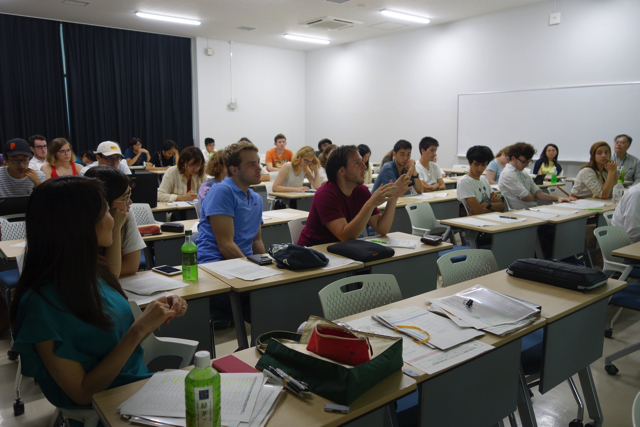
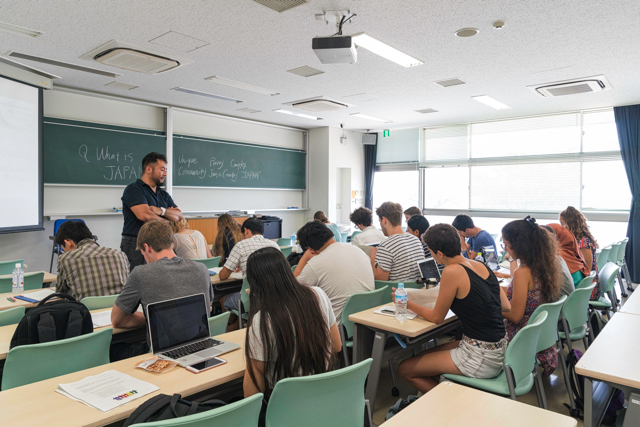
The JTW core courses are designed primarily for JTW students with these courses’ explicit aim being to introduce the culture, society, economy, and politics of Japan in today’s world – the core academic scope of the JTW program. Instruction is in English. All JTW students are required to enroll in at least TWO JTW core course per semester towards the JTW completion requirements.
-
- Each course comprises 15 class sessions, meeting once a week during a 15-week period.
- Each course is worth 2 credits (upon successful completion).
-
- You are allowed to enroll in more than two JTW Core Courses. In fact, you can satisfy the JTW completion requirements solely through JTW Core Courses. For instance, if you choose and complete seven JTW Core Courses, amounting to 14 credit hours, you can fulfill the requirements without having to enroll in any other categories of courses or projects, if that is your preference.
Click below to see the latest offerings of JTW Core Courses:
JTW Core Course List & Timetable for Fall-Winter 2026-27
JTW Core Course List & Timetable for Spring-Summer 2026
JTW Core Course List & Timetable for Fall-Winter 2025-26
2.3. Japanese Language Courses (JACs) – Optional
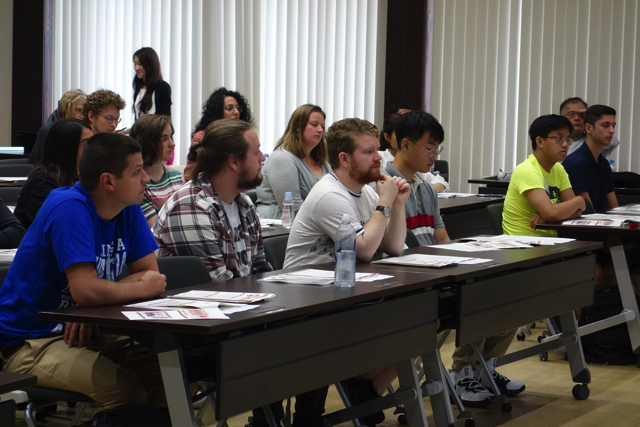
“JACs” refers to a set of Japanese language courses designed to offer four types and up to eight levels of Japanese language lessons for those international students interested in learning the language for credit. JTW students may enroll in JACs course as an option for meeting the JTW completion requirements. Each JACs course runs as a series of small-group, interactive, and practical sessions.
-
- JACs adopts a quarter system for its instruction; each course (e.g., K-3, Kanji course at Level 3) spreads across two quarters (a.k.a., “round”).
- Per quarter, each course comprises 15 class sessions, meeting twice a week during a seven-and-half-week period (7.5 weeks).
- Your class performance will be subject to formal grading every quarter. Nonetheless, your grades will be reported to you only at the end of Quarter 2 (Summer Quarter) and at the end of Quarter 4 (Winter Quarter) through the JACs webpage.
- Per semester, you are required to attend JACs courses for two consecutive quarters, totaling 15 weeks (e.g., Quarter 1 and Quarter 2).
- If you are at the I-2 level or higher, you may enroll for credit in up to 3 courses per quarter, and at the I-5 level or higher up to four courses per quarter.
- Regardless of the course level (from Beginners to Advanced), a maximum of 4 credits (equivalent to 2 JACs semester-long courses) may be counted towards the JTW completion requirements.
2.4. Independent Study Project (ISP) – Optional
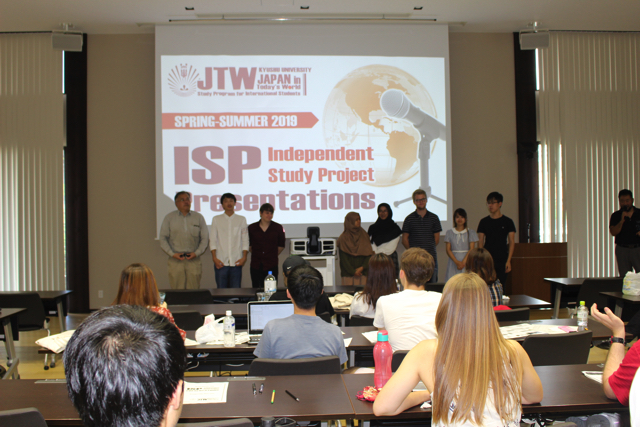
An Independent Study Project (ISP) is an optional research project for JTW students; it is a semester-long, topic-driven research project that you may choose to carry out within the field of or closely related to Japanese studies of your interest.
If you choose to work on your ISP:
- The JTW faculty coordinators will help arrange on your behalf a faculty member, in or outside the JTW program, appropriate to serve as your ISP supervisor.
- You are required to design and carry out your research project under faculty guidance. You will meet with your supervisor two or more times per month throughout the semester, according to a mutually decided schedule. Initial meetings involve discussing and settling jointly on the student’s research topic and approach.
- To complete your ISP, you must meet the requirements arranged in advance with your project supervisor.
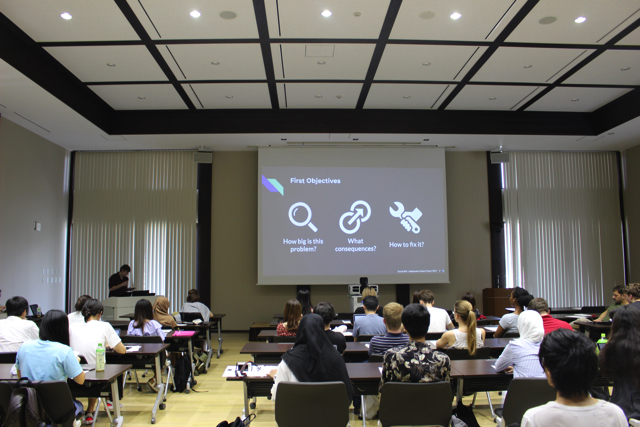
- You are required to share your research results with the Kyushu University community by making an end-of-semester oral presentation and turning in a written report.
- Your oral presentation and written paper are subject to formal grading, and together you may earn 2 credits upon successfully completing your ISP.
- Per semester, only one ISP may be counted towards the JTW completion requirements.
- Only if you are one-year JTW student (participating in the program for two consecutive semesters – from fall through spring), it is possible to extend your ISP to two semesters in certain cases with approval of your ISP supervisor and a JTW faculty coordinator.
- ISPs for two semester length are awarded four credits in total, but only at the end of the second semester, for ISP works successfully completed. No partial credit is granted for unfinished projects.
2.5. Advanced Laboratory Research (ALR) – Optional
An ALR project is an optional opportunity for you to design and carry out a research project of your interest typically via participating in an ongoing broad research project in a laboratory setting in the faculties of science and engineering.
- ALR projects are conducted in English, and this opportunity is available if you are: 1) majoring in science or engineering; and 2) in at least your third year of study in your home university.
- You are required to carry out your ALR project in a laboratory setting under the guidance of an appropriate specialist as your ALR supervisor in any of the faculties of Engineering, Sciences, Agriculture, or Pharmacy.
- The JTW faculty coordinators will help arrange on your behalf a faculty member, outside the JTW program, appropriate to serve as your ALR supervisor.
- Learning objectives and achievement criteria as well as research duties and expectations vary significantly by ALR supervisors; these are determined by negotiation between you and your ALR supervisor, and in consultation with a JTW faculty coordinator. To complete your ALR project, you must meet the requirements arranged in advance with your ALR supervisors.
- Per semester, only one ALR may be counted towards the JTW completion requirements.


2.6. Regular Faculty Courses – Optional
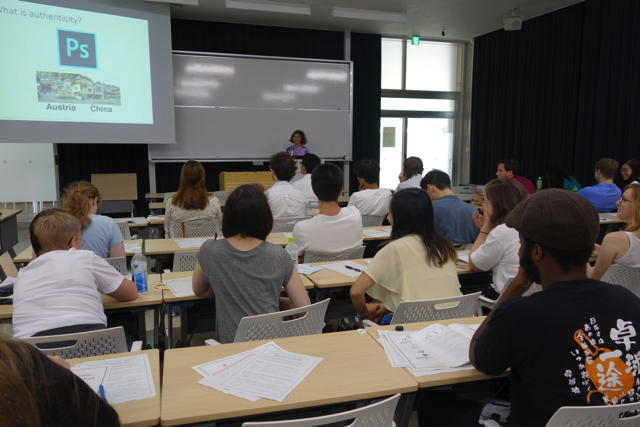
“Regular faculty courses” refer to those offered outside the JTW program by standard faculties (schools/departments) – such as Law, Economics, Design, Science, Engineering, etc. – and primarily for their degree-seeking students. While still limited, the number of faculty courses taught in English have in recent year been increasing. While participating in the JTW program, you may enroll in these courses for credit as an option.
-
- Many English-taught faculty courses last for a semester (equal to two quarters). In this case, same as the JTW course courses, each course comprises 15 class sessions, meeting once a week during a 15-week period, and is worth 2 credits (upon successful completion).
- You may count up to 4 credit hours from regular faculty courses towards meeting the JTW completion requirements.
- Some faculty courses last for a quarter (one-half of a semester).
- Graduate-level courses are not available to JTW students; an exception may be made only if you are graduate students at your home university.
- Enrollment in a regular faculty course is subject to the approval of both the course instructor and one of the JTW faculty coordinators.
Click below to see what Regular Faculty Courses are available:
Where To Look For Regular Faculty Courses
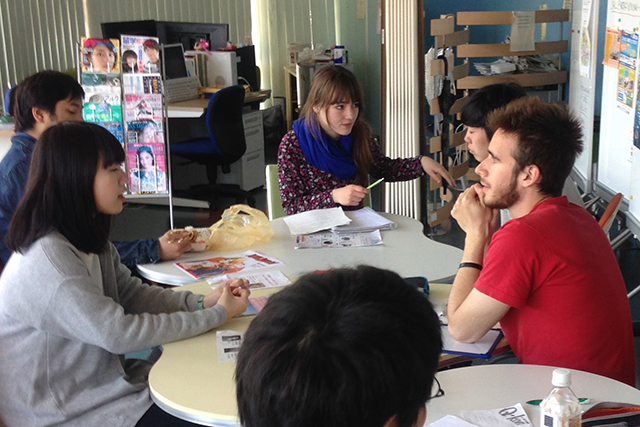
3. Experiential Learning (For Cultural Immersion)
3.1. JTW Field Study Trips
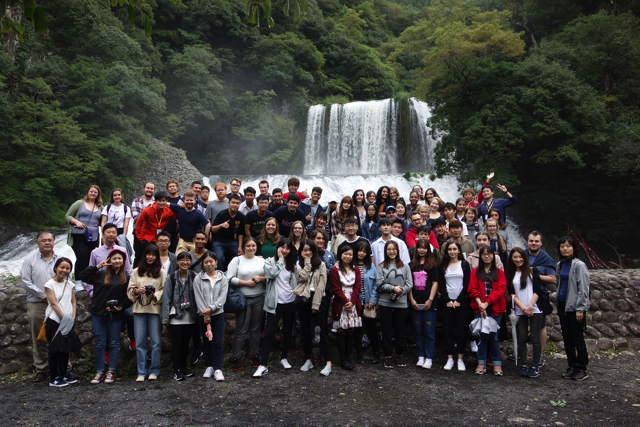
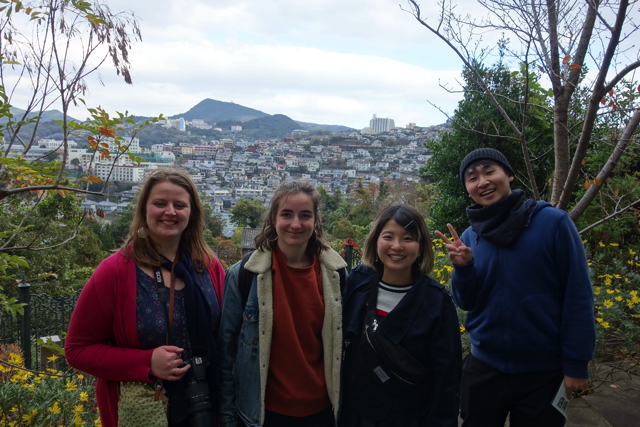
As studies on international education have long suggested, field study trips are clearly one of the most direct, effective and enjoyable means to facilitate experiential learning of a culture of your interest. To help deepen your understanding of Japanese culture and society of the past and present, the JTW program conducts on your behalf a series of field study trips. While specific destinations and contents of learning activities are subject to change every semester, typically, JTW field study trips include 8-10 trips over the course of a program year (October – July), roughly at a once-a-month pace.
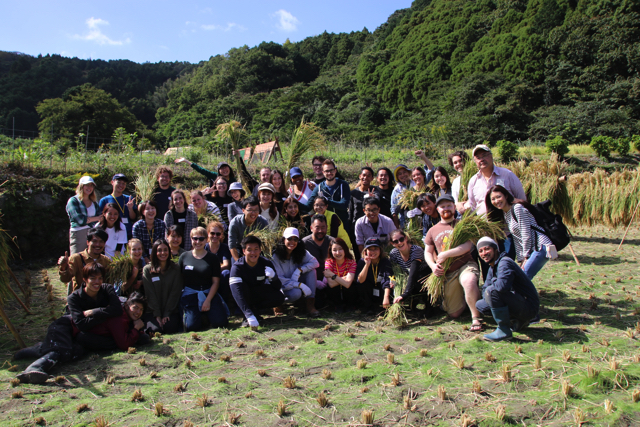
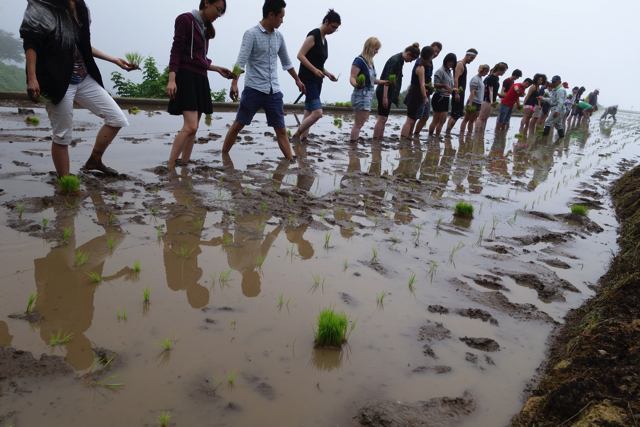
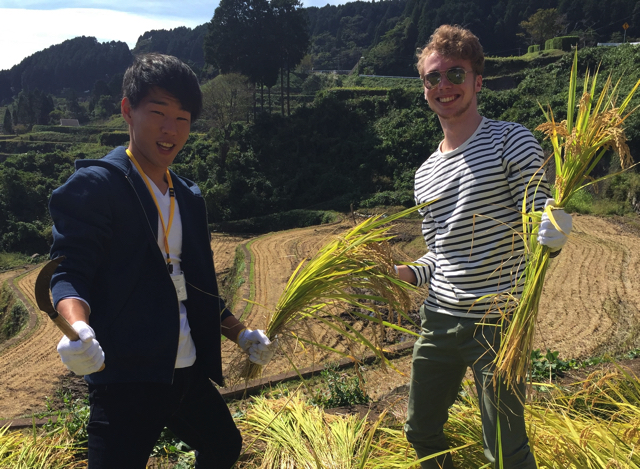
Most study trips will take you somewhere in the northern part of Kyushu Island, including Nagasaki. Some trips involve physical activities such as experiencing rice reaping and planting, seated meditation at a nationally renowned Buddhist temple, and interacting with local elementary school students in their classrooms.
Your participation is mandatory for some of the study trips for reasons essential to addressing the educational missions of the JTW program. Some trips are optional. You are strongly encouraged to participate in all the trips arranged during your study period to get the most out of what the JTW program offers as Kyushu University’s premier study program for international students!

3.2. Student Buddy Program
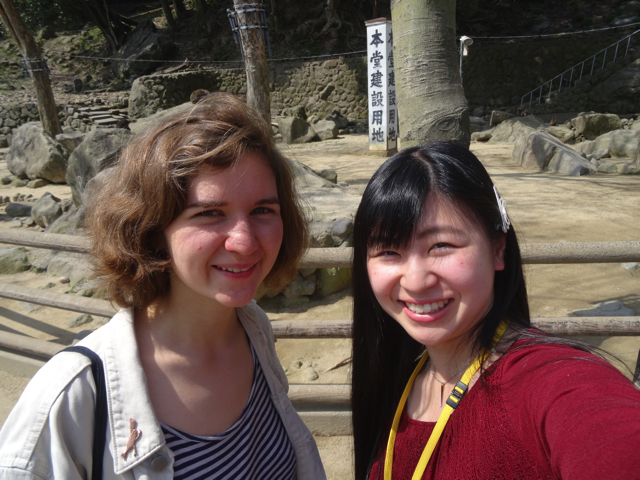
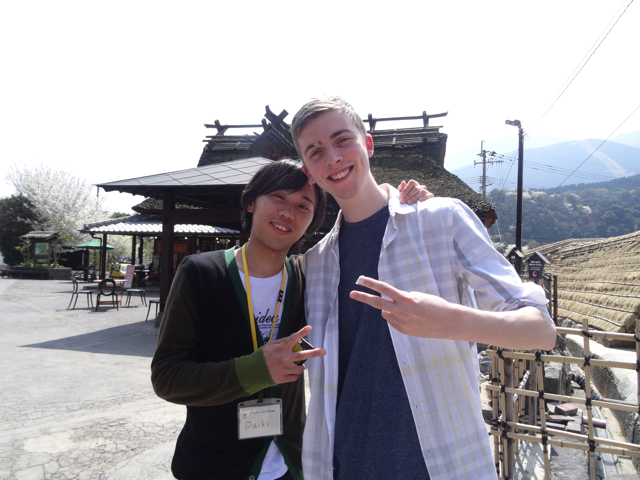
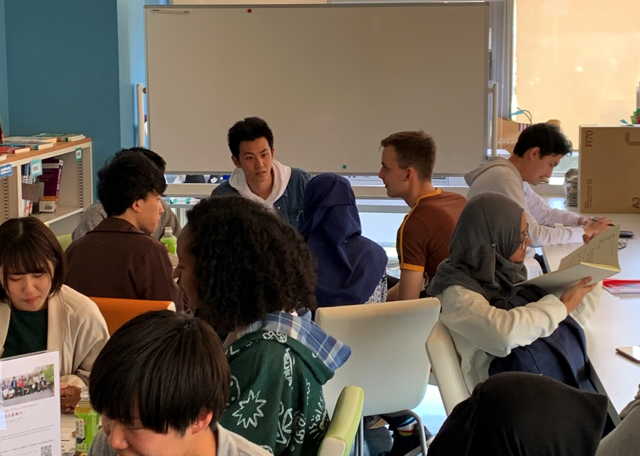
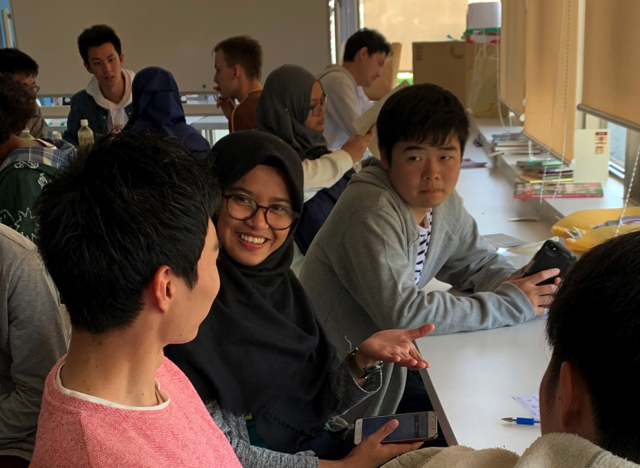
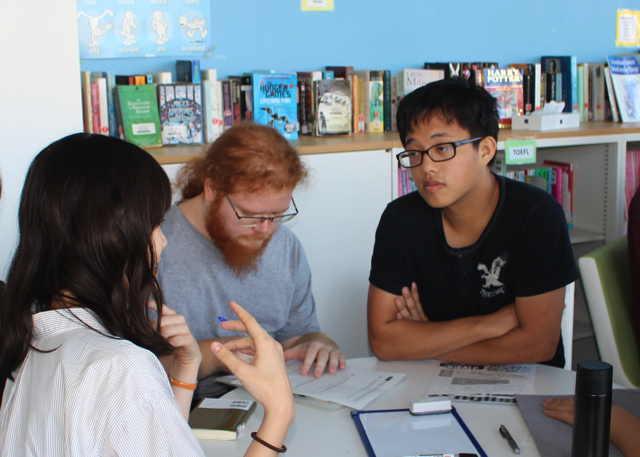
Once your program participation becomes official, the JTW program starts arranging a student-to-student partnership between you and your supporter, who JTW calls a JTW student buddy. Your buddy is typically a Japanese student based in Ito campus of Kyushu University. The student buddy is prepared for providing you, throughout you study period, with one-on-one assistance.
The student buddy will befriend, look after you, and study with you in a variety of ways. If you are interested, your buddy may explore with you Fukuoka City and its surrounds when time permits. They may also accompany you on JTW-arranged activities, including field study trips, take the same classes together, arrange informal, tutor-initiated parties and trips, introduce you to the university club of your choice, and otherwise offer their support the ways that work for the two of you.
Many of the student buddies are interested in, or seriously planning on, studying abroad next year themselves, and so are highly motivated to work with you as part of their preparation for international learning. You may interact with your student buddy in English, Japanese or a combination of both, depending on the mutual needs, interests or comfort.

3.3. Home Visit Program
The JTW program also arranges, if you’re interested, to introduce you to a Japanese family living in the Fukuoka City area, typically with school-age children, who will host you on periodic weekend visits to their home throughout the year/semester. If both parties’ schedule allows, they may take you out to enjoy popular local sites and events for your cultural learning.
Are you interested in experiencing standard Japanese family life first hand? If so, this special arrangement can be an excellent opportunity for your immersion experience away from the regular classroom and even from the campus at large. Some JTW students, in fact, end up staying with more than one host family and developing warm friendships that last well beyond the end of their study period.
All the instructions for the arrangement of the home visit program are delivered, together with a form for you to fill in, during the on-campus orientation event upon your arrival.

3.4. On-Campus Exchange Activities
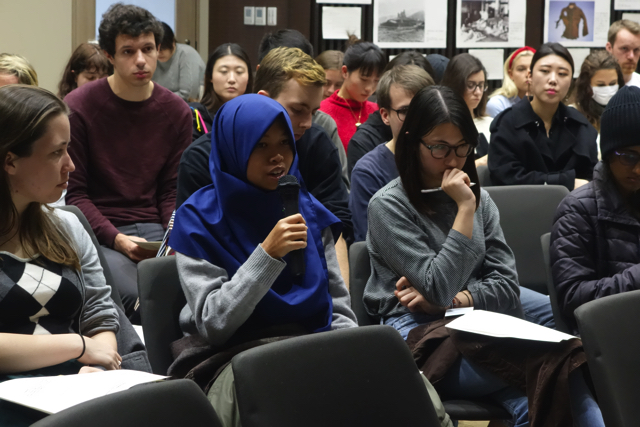
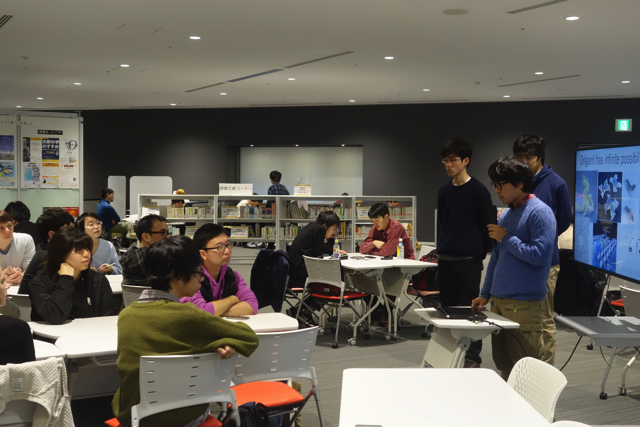
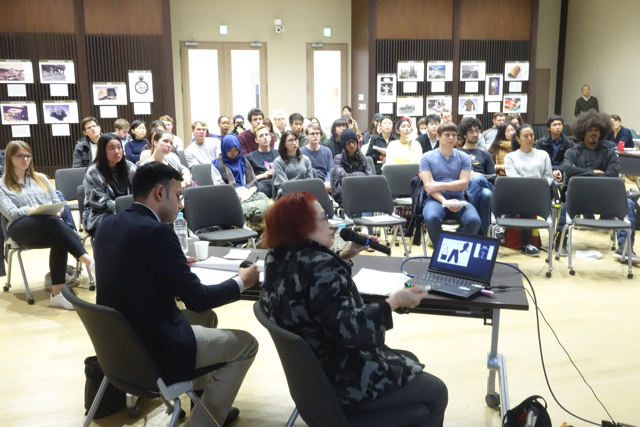
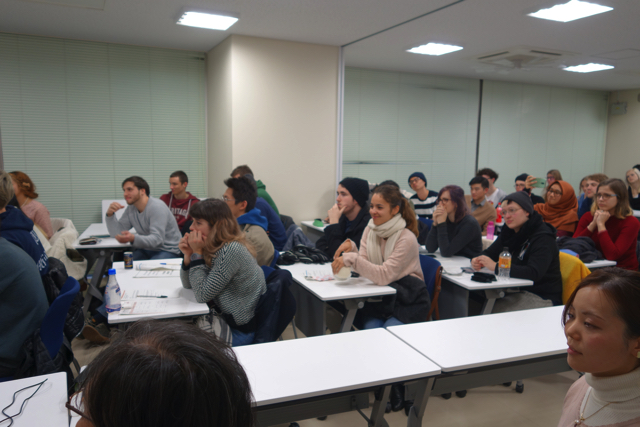
Every semester the JTW program arranges and conducts – by itself and/or in collaboration with other units on campus – activities or events aiming to facilitate your experiential learning of Japanese culture and society and to enable your cross-cultural exchange with local students.
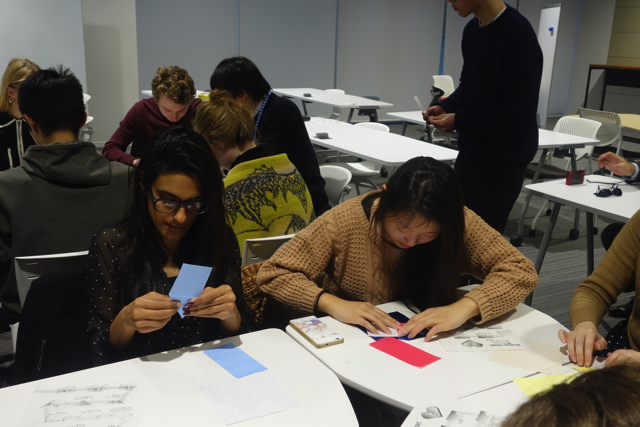
Recent instances of such activities/events include the annual Origami (art of paper-folding) workshop with the Central Library; Nagasaki Atomic Bombing Survivor Symposium, a semester-long language table session with Japanese students, and so on.
Furthermore, JTW students are encouraged to take the lead for planning such activities, rather than just participating in program-arranged ones. If interested, you may propose, plan, and conduct activities based on your interest in consultation with the JTW program. JTW will seek to support your on-campus exchange activities.